What Makes Aluminum "Marine Grade"?
In the highly corrosive, salt-heavy environment of Palm Beach County, standard commercial aluminum (like the kind used in basic window frames or cheap hardware) will oxidize, pit, and crumble within months of exposure to the ocean. To survive, marine fabricators rely exclusively on Marine Grade Aluminum Alloys—specifically the 5000 and 6000 series.
These specific alloys are infused with vital chemical elements, primarily Magnesium and Silicon. These additions dramatically increase the metal's tensile strength and, most importantly, its natural resistance to galvanic corrosion and saltwater degradation.
Decoding the Alloys: 5052, 5086, and 6061-T6
When engineering boat hulls, T-tops, and holding tanks, choosing the correct alloy is the difference between a lifetime repair and a sinking vessel. Here is a breakdown of the metals our certified welders utilize every day:
- 5052-H32 Aluminum: Known as the supreme marine sheet metal. It has exceptional workability and the highest fatigue strength of the non-heat-treatable alloys. We use 5052 extensively for custom watertight fuel tanks, water holding tanks, and complex formed hull patches.
- 5086 Aluminum: Thicker, stiffer, and highly resistant to salt corrosion. Because of its incredible strength, 5086 is the absolute standard for heavy-duty ship hulls, commercial pontoon logs, and workboat superstructures. It is notably harder to form than 5052, but provides vastly superior impact resistance.
- 6061-T6 Aluminum: The go-to structural extrusion alloy. It is highly heat-treatable and contains silicon. We use 6061 tubing for fabricating structural frameworks like boat T-Tops, tuna towers, leaning posts, and radar arches. Note: 6061 must be professionally anodized or powder-coated to maximize its survival on the Florida coast.
The Threat of Galvanic Corrosion
One of the most common reasons boat owners call our emergency mobile welding service in Jupiter, Boca Raton, and West Palm Beach is due to galvanic corrosion. This is a silent killer in the marine world.
Galvanic corrosion occurs when two dissimilar metals (for example, a stainless steel bolt driven into an aluminum boat frame) are physically connected and submerged in a conductive electrolyte (like saltwater). The saltwater acts as a battery acid, causing the less noble metal (the aluminum) to rapidly sacrifice its electrons to the noble metal (the stainless steel). The result is severe bubbling, white powdering, and eventual structural failure of the aluminum component.
Our repair process involves cutting out the highly corroded "dead" aluminum, replacing it with fresh marine-grade plating, and educating our clients on the proper use of isolating compounds (like Tef-Gel) and sacrificial zinc/aluminum anodes to protect their investment.
The Critical Importance of AC TIG Cleaning
Aluminum possesses a unique physical property: it instantly forms an aluminum-oxide skin when exposed to the atmosphere. This oxide layer is incredibly hard and melts at roughly 3,700°F (2,037°C), while the pure base aluminum underneath melts at just 1,220°F (660°C).
If you try to weld aluminum without removing this oxide layer, the base metal will melt and collapse before the surface even liquifies. This is where high-end technology comes in. At Palm Beach Welding, we utilize advanced High-Frequency AC (Alternating Current) TIG Welding.
The AC current rapidly switches polarity (up to 200 times per second). The positive half of the wave physically "blasts" the oxide layer off the metal (a process called cathodic cleaning), while the negative half of the wave provides the deep heat penetration required to fuse the base metals together. Combined with 100% pure Argon shielding gas, we ensure the weld pool is utterly pure, resulting in molecularly sound, x-ray quality welds.
Why Hire Our Mobile Marine Experts?
Transporting a 35-foot center console or a massive commercial workboat to a fabrication shop is not just difficult; it's often impossible. We bring our fully outfitted TIG welding rigs directly to your marina, dry stack, or residential driveway anywhere in Palm Beach County. We understand boat architecture, marine safety standards, and the strict requirements for USCG-compliant fuel tank welding.
Frequently Asked Questions
Can you weld marine aluminum with a standard MIG welder?
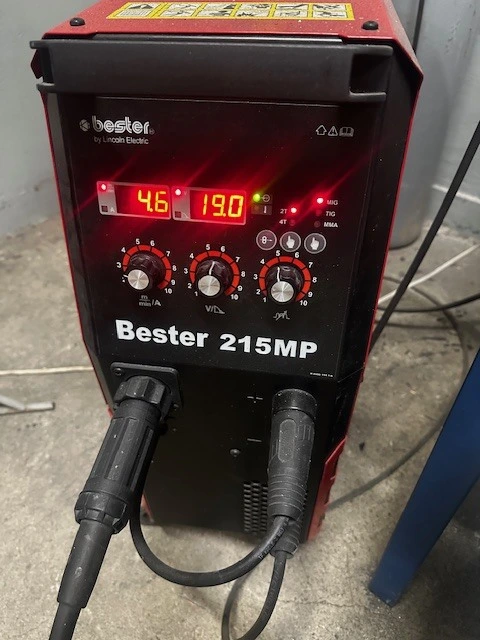
While spool-gun MIG welding can be used for thick, hidden structural aluminum, it is generally considered too messy and imprecise for aesthetic marine work. We use TIG welding for boat T-tops, towers, and tanks because it offers absolute control, precise heat management, and zero spatter.
How do you repair a leaking aluminum boat fuel tank?
Safety is paramount. The tank must be completely drained, fully degassed, and purged with an inert gas (like argon) to displace all oxygen and fumes before the welding arc is ever struck. We then TIG weld the cracks and strictly pressure-test the tank to ensure it is 100% leak-proof.
Do you service yachts and commercial vessels?
Yes. Our mobile welding units are fully insured and our welders are AWS-certified. We are cleared to work in major boatyards, marinas, and commercial ports from Jupiter down to Boca Raton.